
NCERT Solutions for Class 11th Biology
Chapter 10 CELL CYCLE AND CELL DIVISION
1. What is the average cell cycle span for a mammalian cell?
Solnution: 24 hours.
Solnution: 24 hours.
2. Distinguish cytokinesis from karyokinesis.
Solnution: Differences between cytokinesis and karyokinesis are:
 Download The App BY Click Here
Solnution: Differences between cytokinesis and karyokinesis are:
Download The App BY Click Here
3. Describe the events taking place during interphase.
Solnution: The interphase, though called the resting phase, is metabolically quite active. It is the time during which the cell prepares itself for division by undergoing both cell growth and DNA replication in an orderly manner. The interphase is further divided into three phases:
• G1 (Gap 1) phase
• S (Synthesis) phase
• G2 (Gap 2) phase
G1 phase corresponds to the interval between mitosis of previous cell cycle and initiation of DNA replication. During G1 phase the cell is metabolically active and grows continuously but does not replicate its DNA S or synthesis phase marks the period during which DNA synthesis or replication takes place. During this time the amount of DNA doubles per cell. In animal cells, during the S phase, DNA replication occurs in the nucleus, and the centriole duplicates in the cytoplasm. During the G2 phase synthesis of DNA stops while cell growth continues with synthesis of protein and RNA in preparation for mitosis.
Solnution: The interphase, though called the resting phase, is metabolically quite active. It is the time during which the cell prepares itself for division by undergoing both cell growth and DNA replication in an orderly manner. The interphase is further divided into three phases:
• G1 (Gap 1) phase
• S (Synthesis) phase
• G2 (Gap 2) phase
G1 phase corresponds to the interval between mitosis of previous cell cycle and initiation of DNA replication. During G1 phase the cell is metabolically active and grows continuously but does not replicate its DNA S or synthesis phase marks the period during which DNA synthesis or replication takes place. During this time the amount of DNA doubles per cell. In animal cells, during the S phase, DNA replication occurs in the nucleus, and the centriole duplicates in the cytoplasm. During the G2 phase synthesis of DNA stops while cell growth continues with synthesis of protein and RNA in preparation for mitosis.
4. What is G0 (quiescent phase) of cell cycle?
Solnution: G0 phase is the phase of inactivation of cell cycle due to non-availability of mitogens and energy rich compounds. Cells in this stage remain metabolically active but no longer proliferate i.e., do not grow or differentiate unless called on to do so depending on the requirement of the organism. E.g., Nerve and heart cells of chordates are in permanent G0 phase.
Solnution: G0 phase is the phase of inactivation of cell cycle due to non-availability of mitogens and energy rich compounds. Cells in this stage remain metabolically active but no longer proliferate i.e., do not grow or differentiate unless called on to do so depending on the requirement of the organism. E.g., Nerve and heart cells of chordates are in permanent G0 phase.
Question 5: Why is mitosis called equational division?
Answer Mitosis is the process of cell division wherein the chromosomes replicate and get equally distributed into two daughter cells. The chromosome number in each daughter cell is equal to that in the parent cell, i.e., diploid. Hence, mitosis is known as equational division.
Answer Mitosis is the process of cell division wherein the chromosomes replicate and get equally distributed into two daughter cells. The chromosome number in each daughter cell is equal to that in the parent cell, i.e., diploid. Hence, mitosis is known as equational division.
Question 6: Name the stage of cell cycle at which one of the following events occur:
(i) Chromosomes are moved to spindle equator
(ii) Centromere splits and chromatids separate
(iii) Pairing between homologous chromosomes takes place
(iv) Crossing over between homologous chromosomes takes place
Answer (i) Metaphase
(ii) Anaphase
(iii) Zygotene of meiosis I
(iv) Pachytene of meiosis I
(i) Chromosomes are moved to spindle equator
(ii) Centromere splits and chromatids separate
(iii) Pairing between homologous chromosomes takes place
(iv) Crossing over between homologous chromosomes takes place
Answer (i) Metaphase
(ii) Anaphase
(iii) Zygotene of meiosis I
(iv) Pachytene of meiosis I
Question 7: Describe the following:
(a) synapsis (b) bivalent (c) chiasmata Draw a diagram to illustrate your answer.
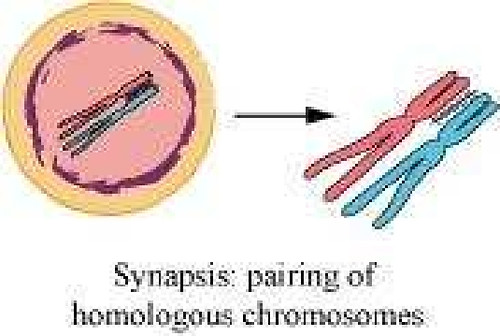
Answer (a) Synapsis
The pairing of homologous chromosomes is called synapsis. This occurs during the second stage of prophase I or zygotene.
(b) Bivalent
Bivalent or tetrad is a pair of synapsed homologous chromosomes. They are formed during the zygotene stage of prophase I of meiosis.

(c) Chiasmata
Chiasmata is the site where two sister chromatids have crossed over. It represents the site of cross-over. It is formed during the diplotene stage of prophase I of meiosis.

(a) synapsis (b) bivalent (c) chiasmata Draw a diagram to illustrate your answer.
Answer (a) Synapsis
The pairing of homologous chromosomes is called synapsis. This occurs during the second stage of prophase I or zygotene.
(b) Bivalent
Bivalent or tetrad is a pair of synapsed homologous chromosomes. They are formed during the zygotene stage of prophase I of meiosis.
(c) Chiasmata
Chiasmata is the site where two sister chromatids have crossed over. It represents the site of cross-over. It is formed during the diplotene stage of prophase I of meiosis.
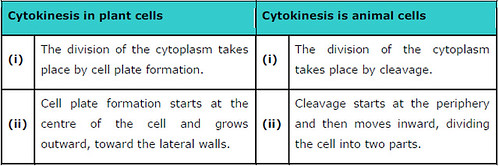
Question 8: How does cytokinesis in plant cells differ from that in animal cells?
Answer
Answer
9. Find examples where the four daughter cells from meiosis are equal in size and where they are found unequal in size.
Solnution: During formation of male gametes (i.e., spermatozoa) in a typical mammal (i.e., human being), the four daughter cells formed from meiosis are equal in size. On the other hand, during formation of female gamete (i.e., ovum) in a typical mammal (i.e., human being), the four daughter cells are unequal in size.
Solnution: During formation of male gametes (i.e., spermatozoa) in a typical mammal (i.e., human being), the four daughter cells formed from meiosis are equal in size. On the other hand, during formation of female gamete (i.e., ovum) in a typical mammal (i.e., human being), the four daughter cells are unequal in size.
10. Can there be DNA replication without cell division?
Solnution: Yes. Endomitosis is the multiplication of chromosomes present in a set in nucleus without karyokinesis and cytokinesis result-ing in numerous copies within each cell. It is of 2 types.
Polyteny: Here chromosomes divide and redivide without separation of chromatids so that such chromosomes become multistranded with many copies of DNA. Such polytene (many stranded) chromosomes remain in permanent prophase stage and do not undergo cell cycle e.g., polytene (salivary glands) chromosome of Drosophila has 512- 1024 chromatids. Here number of sets of chromosomes does not change.
Polyploidy (endoduplication) : Here all chromosomes in a set divide and its chromatids separate but nucleus does not divide. This results in an increase in number of sets of chromosomes in the nucleus (4x, 8x….). This increase in sets of chromosomes is called polyploidy. It can be induced by colchicine and granosan. These chromosomes are normal and undergo cell cycle.
Solnution: Yes. Endomitosis is the multiplication of chromosomes present in a set in nucleus without karyokinesis and cytokinesis result-ing in numerous copies within each cell. It is of 2 types.
Polyteny: Here chromosomes divide and redivide without separation of chromatids so that such chromosomes become multistranded with many copies of DNA. Such polytene (many stranded) chromosomes remain in permanent prophase stage and do not undergo cell cycle e.g., polytene (salivary glands) chromosome of Drosophila has 512- 1024 chromatids. Here number of sets of chromosomes does not change.
Polyploidy (endoduplication) : Here all chromosomes in a set divide and its chromatids separate but nucleus does not divide. This results in an increase in number of sets of chromosomes in the nucleus (4x, 8x….). This increase in sets of chromosomes is called polyploidy. It can be induced by colchicine and granosan. These chromosomes are normal and undergo cell cycle.
11. List the main differences between mitosis and meiosis.
Solnution:

Solnution:
12. Distinguish anaphase of mitosis from anaphase I of meiosis.
Solnution: Anaphase of mitosis : It is the phase of shortest duration. APC (anaphase promoting complex) develops. It degenerates proteins -binding the two chromatids in the region of centromere. As a result, the centromere of each chromosome divides. This converts the two chromatids into daughter chromosomes each being attached to the spindle pole of its side by independent chromosomal fibre. The chromosomes move towards the spindle poles with the centromeres projecting towards the poles and the limbs trailing behind. There is corresponding shortening of chromosome fibres. The two pole-ward moving chromosomes of each type remain attached to each other by interzonal fibres. Ultimately, two groups of chromosomes come to lie at the spindle poles.
 Download The App BY Click Here
Anaphase I of meiosis : Chiasmata disappear completely and the homologous chromosomes separate. The process is called disjunction. The separated chromosomes (univalents) show divergent chromatids and are called dyads. They move towards the spindle poles and ultimately form two groups of haploid chromosomes.

Solnution: Anaphase of mitosis : It is the phase of shortest duration. APC (anaphase promoting complex) develops. It degenerates proteins -binding the two chromatids in the region of centromere. As a result, the centromere of each chromosome divides. This converts the two chromatids into daughter chromosomes each being attached to the spindle pole of its side by independent chromosomal fibre. The chromosomes move towards the spindle poles with the centromeres projecting towards the poles and the limbs trailing behind. There is corresponding shortening of chromosome fibres. The two pole-ward moving chromosomes of each type remain attached to each other by interzonal fibres. Ultimately, two groups of chromosomes come to lie at the spindle poles.
Download The App BY Click HereAnaphase I of meiosis : Chiasmata disappear completely and the homologous chromosomes separate. The process is called disjunction. The separated chromosomes (univalents) show divergent chromatids and are called dyads. They move towards the spindle poles and ultimately form two groups of haploid chromosomes.
Question 13: Discuss with your teacher about
(i) haploid insects and lower plants where cell-division occurs, and
(ii) some haploid cells in higher plants where cell-division does not occur.
Answer (i) In some insects and lower plants, fertilization is immediately followed by zygotic meiosis, which leads to the production of haploid organisms. This type of life cycle is known as haplontic life cycle.
(ii) The phenomenon of polyploidy can be observed in some haploid cells in higher plants in which cell division does not occur. Polyploidy is a state in which cells contain multiple pairs of chromosomes than the basic set. Polyploidy can be artificially induced in plants by applying colichine to cell culture.
(i) haploid insects and lower plants where cell-division occurs, and
(ii) some haploid cells in higher plants where cell-division does not occur.
Answer (i) In some insects and lower plants, fertilization is immediately followed by zygotic meiosis, which leads to the production of haploid organisms. This type of life cycle is known as haplontic life cycle.
(ii) The phenomenon of polyploidy can be observed in some haploid cells in higher plants in which cell division does not occur. Polyploidy is a state in which cells contain multiple pairs of chromosomes than the basic set. Polyploidy can be artificially induced in plants by applying colichine to cell culture.
Question 14: Can there be mitosis without DNA replication in S phase?
Answer Mitotic cell division cannot take place without DNA replication in S phase. Two important events take place during S phase – one is the synthesis or duplication of DNA and the other is the duplication of the centriole. DNA duplication is important as it maintains the chromosome number in the daughter cells. Mitosis is an equational
division. Therefore, the duplication of DNA is an important step.
Answer Mitotic cell division cannot take place without DNA replication in S phase. Two important events take place during S phase – one is the synthesis or duplication of DNA and the other is the duplication of the centriole. DNA duplication is important as it maintains the chromosome number in the daughter cells. Mitosis is an equational
division. Therefore, the duplication of DNA is an important step.
Question 15: Can there be DNA replication without cell division?
Answer There can be DNA replication without cell division. During cell division, the parent cell gets divided into two daughter cells. However, if there is a repeated replication of DNA without any cell division, then this DNA will keep accumulating inside the cell. This would increase the volume of the cell nucleus, thereby causing cell expansion.
An example of DNA duplication without cell division is commonly observed in the salivary glands of Drosophila. The chromosome undergoing repeated DNA duplication is known as polytene chromosome.
Answer There can be DNA replication without cell division. During cell division, the parent cell gets divided into two daughter cells. However, if there is a repeated replication of DNA without any cell division, then this DNA will keep accumulating inside the cell. This would increase the volume of the cell nucleus, thereby causing cell expansion.
An example of DNA duplication without cell division is commonly observed in the salivary glands of Drosophila. The chromosome undergoing repeated DNA duplication is known as polytene chromosome.
16. Analyse the events during every stage of ceil cycle and notice how the following two parameters change.
(i) number of chromosomes (N) per cell
(ii) amount of DNA content (C) per cell
Solnution: Number of chromosomes and amount of DNA change during S-phase and anaphase of cell cycle. S or synthesis phase marks the period during which DNA synthesis or replication takes place. During this time the amount of DNA per cell doubles. If the initial amount of DNA is denoted as 2C then it increases to 4C. However, there is no increase in the chromosome number; if the cell had diploid or 2N number of chromosomes at G„ even after S phase the number of chromosomes remains the same, i.e., 2N.
In mitotic anaphase, number of chromosomes remains the same. It is only sister chromatids which move towards their respective poles. DNA content remains unchanged. In anaphase I of meiosis, number of chromosomes are reduced to half, i.e., from 2N to IN and also DNA content decrease to one half i.e., from 4C to 2C. In anaphase II of meiosis II DNA content decreases to one half from 2C to 1C but chromosome number remain same.
(i) number of chromosomes (N) per cell
(ii) amount of DNA content (C) per cell
Solnution: Number of chromosomes and amount of DNA change during S-phase and anaphase of cell cycle. S or synthesis phase marks the period during which DNA synthesis or replication takes place. During this time the amount of DNA per cell doubles. If the initial amount of DNA is denoted as 2C then it increases to 4C. However, there is no increase in the chromosome number; if the cell had diploid or 2N number of chromosomes at G„ even after S phase the number of chromosomes remains the same, i.e., 2N.
In mitotic anaphase, number of chromosomes remains the same. It is only sister chromatids which move towards their respective poles. DNA content remains unchanged. In anaphase I of meiosis, number of chromosomes are reduced to half, i.e., from 2N to IN and also DNA content decrease to one half i.e., from 4C to 2C. In anaphase II of meiosis II DNA content decreases to one half from 2C to 1C but chromosome number remain same.
Comments
Post a Comment